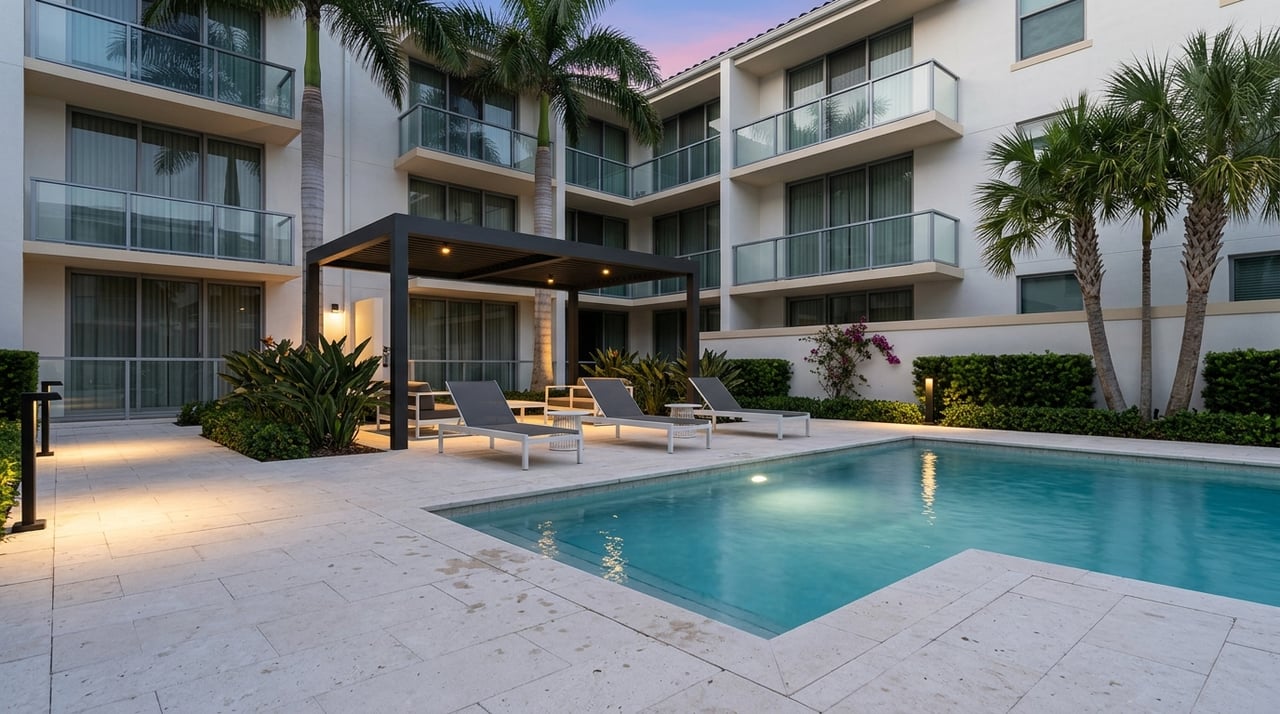
Exploring Rental Potential In Bonita Springs Condos
July 23, 2026
July 23, 2026
What makes one Bonita Springs condo a solid rental candidate while another struggles to perform? In a market shaped by seasonal travel, condo rules, and lifestyle-driven demand, the answer usually comes down to more than just price or location. If you are weighing a condo as an income-producing property, this guide will help you think through demand, competition, seasonality, and the building-specific details that can directly affect returns. Let’s dive in.
Bonita Springs sits in a market that leans heavily toward ownership. ACS 2024 5-year data shows 55,904 residents, a median age of 62.1, an owner-occupied housing rate of 81.8%, and a median owner-occupied home value of $497,100.
That matters because condo rental demand here is often tied more to seasonal living, second-home use, and visitor patterns than to a large year-round renter pool. If you are exploring rental potential, it helps to think of many condos as lifestyle assets first and income assets second.
Lee County tourism adds an important layer to that picture. The Fort Myers area recorded 3,320,700 visitors, 4,738,000 room nights, and $5.125 billion in total economic impact in 2025.
Visitor tracking also shows Bonita Springs captured a meaningful share of stays. In the Jan-Mar 2025 report, 8% of visitors stayed in Bonita Springs, and in the Oct-Dec 2025 report, that figure was 10%.
If you are modeling rental income, seasonality should be front and center. NOAA climate normals for nearby Fort Myers Page Field show a clear difference between winter and summer conditions.
January averages a 75.0°F daily high, a 54.3°F daily low, and 2.43 inches of precipitation. August averages a 91.7°F daily high, a 75.1°F daily low, and 10.43 inches of precipitation.
That weather pattern lines up with the area’s tourism data and supports a common local reality: winter and early spring tend to be the stronger months for condo rental demand, while summer is often softer. You should be careful not to project peak-season performance across the entire year.
The 2025 visitor report reinforces that point. Average occupancy across the Fort Myers area was 73.2% in Jan-Mar 2025, but 56.2% for the full year 2025.
For condo, cottage, and vacation-home inventory, average stay was 6.9 nights, compared with 6.0 nights overall. That spread suggests your underwriting should separate peak-season and off-season assumptions instead of relying on one blended best-case number.
Strong tourism does not automatically mean easy rental performance. As of April 2025, Lee County had 20,488 licensed transient rental units, including 2,153 in Bonita Springs and 871 identified as vacation rentals.
That is useful context because it shows you are entering a competitive supply environment. A condo may benefit from local demand, but it still needs to stand out against a large pool of rental options.
In practical terms, renters are not just comparing your unit to another condo in the same building. They may also be comparing it to other condos, cottages, and vacation homes across the broader area.
Visitor research gives a helpful window into what draws people to Lee County and nearby Bonita Springs. The strongest trip motivators include warm weather, a peaceful and relaxing atmosphere, safety, white sandy beaches, a clean environment, family atmosphere, value, and reasonably priced lodging.
In the Oct-Dec 2025 report, the main reasons for visiting were relax and unwind at 55%, visiting friends and relatives at 42%, beach at 38%, shopping at 14%, and part-time resident or snowbird at 13%. That mix points to a renter profile focused on ease, comfort, and convenience.
The same report shows a fairly compact, repeat-oriented visitor base. Mean travel party size was 2.8 people, 41% of parties were couples, 33% were families, average age was 51, median household income was $115,000, and 82% were repeat visitors.
Average nights in the Fort Myers area were 6.3. For a Bonita Springs condo, that often supports a straightforward conclusion: a quiet, well-kept, easy-to-use unit can be more marketable than one that feels overcomplicated or difficult to maintain.
If you are evaluating a condo for rental use, it helps to align the property with what visitors actually do during their stay. In Oct-Dec 2025, the most common activities were:
That activity mix suggests rental appeal may be stronger when a condo offers practical access to the experiences people already want. Features worth weighing include:
From a design and investment standpoint, this is where thoughtful presentation matters. A clean, cohesive condo that feels calm and functional often fits Bonita Springs demand better than a unit with high-maintenance finishes or a layout that is hard for guests to use.
Trip planning trends also shape rental performance. The 2025 visitor report shows travelers often use digital channels to plan and book, including airline websites or apps at 28%, online search engines at 25%, Airbnb or Vrbo at 19%, hotel websites or apps at 18%, booking websites at 17%, and vacation-rental websites or apps at 12%.
Just as important, 75% planned at least 1 to 2 months ahead. That means lead time matters.
If you own or are buying a condo with seasonal rental goals, your pricing and availability strategy should reflect the fact that many guests are not booking at the last minute. Peak-season positioning often requires planning well before the season arrives.
In Bonita Springs, condo rental potential is not only about market demand. It is also about the association’s rules.
The city’s rental permit ordinance applies to certain non-owner-occupied single-family, duplex, and multifamily dwellings, but it expressly excludes properties with more than six dwelling units that are regulated under Florida condominium or HOA statutes. The city also states that complexes of six or more units functioning under a state-recognized association do not need the city rental permit.
For many condo buyers, that means the more important diligence layer is the condominium association itself. Before you buy, you should confirm exactly what the governing documents allow.
Under Florida’s Condominium Act, an amendment that prohibits renting, changes rental duration, or limits the number of rentals applies only to owners who consent and to buyers who take title after the amendment becomes effective. Florida law also provides that leases incorporate the declaration and bylaws, so both owners and tenants must comply with them.
Associations may levy reasonable fines and may suspend some common-element use rights for violations or delinquency. However, they may not suspend access to elevators, parking spaces, or unit access.
A condo’s rental rules can materially change both gross income and net operating income. That is why building-level diligence is so important before you close.
Focus on these questions early:
Florida also allows condominium associations to charge a transfer fee for a sale, lease, or other transfer only if the condo documents require approval and authorize the fee. The maximum is $150 per applicant, and no renewal fee may be charged for the same lessee.
State guidance also says that when a unit is leased, the tenant has the use rights to common elements that otherwise would be available to the owner, unless those rights are waived in writing. For many renters, amenity access is not a small detail. It is part of the value proposition.
If you are considering shorter stays, tax treatment matters. Florida treats a condo unit rented on a transient basis as a vacation rental.
For rental periods of six months or less, Florida’s 6% state sales tax applies, along with any applicable discretionary surtax and local option transient rental taxes. A person who rents or collects rent on transient accommodations must register with the Florida Department of Revenue to collect, report, and remit those taxes.
By contrast, bona fide written leases for continuous residence longer than six months are exempt from the transient rental tax rules. In short, your lease structure can affect both operations and net income.
When you look at a Bonita Springs condo through an investor lens, the best opportunities often sit at the intersection of demand, design, and rules. A unit may have appealing finishes and a strong location, but rental restrictions can limit its usefulness. On the other hand, a well-positioned condo in a building with workable lease terms may offer more flexibility and better long-term value.
A disciplined review usually includes four layers:
That is where local guidance can add real value. If you are comparing condos, it helps to evaluate not only what looks good on paper, but also what will function well in the real market.
Whether you are searching for a turnkey unit, weighing renovation potential, or trying to understand how condo rules may affect returns, Marco Home Group can help you assess the opportunity with a design-aware, investor-literate approach across Southwest Florida.
Stay up to date on the latest real estate trends.


We pride ourselves in providing personalized solutions that bring our clients closer to their dream properties and enhance their long-term wealth. Contact us today to learn how we can assist you.